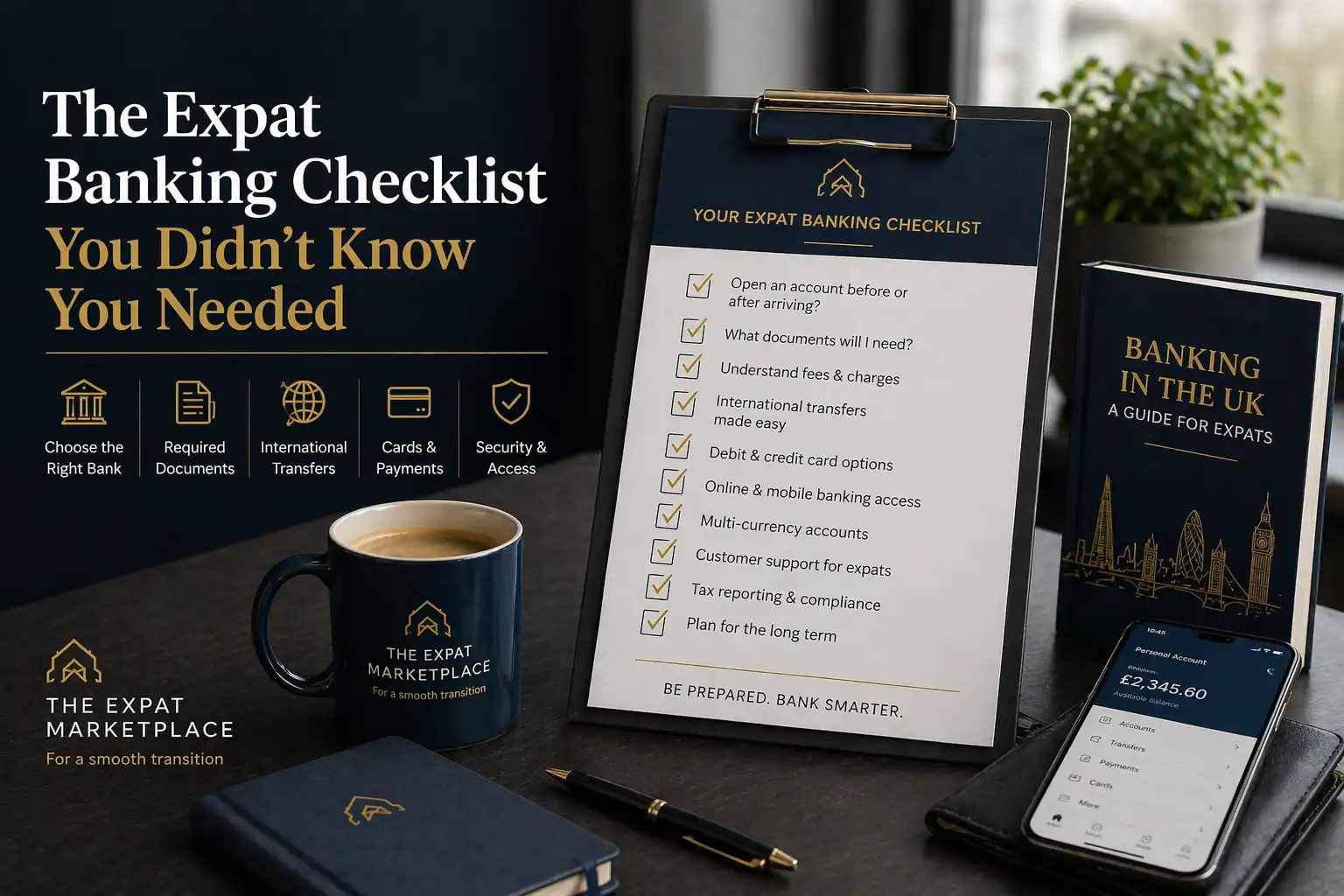
The Expat Banking Checklist You Didn’t Know You Needed
Moving abroad can change almost every part of your financial life. You may be earning in one currency, spending in another and sending money across borders more often than you expected. What once felt like a simple banking setup can quickly become inefficient, expensive or difficult to manage.
This checklist is designed to help you review whether your current banking arrangements still fit the way you live now, and whether they are flexible enough to support whatever comes next.
This article is for general information only and should not be treated as financial advice. Banking needs vary depending on your personal circumstances, country of residence and future plans. You should carry out your own research and seek professional advice where appropriate before making financial decisions.
Why Your Banking Needs Change When You Move Abroad
Living internationally often means your finances become more complex, even if your lifestyle feels settled.
- You may be paid in a different currency from the one you spend
- You may need to move money between countries regularly
- Your residency status may affect how banks view your account
- Access to local services may become harder if your account is tied to your home country
A setup that worked perfectly before you moved may no longer be the most practical option now.
Expat Banking Checklist
Use the questions below to assess whether your banking arrangements are still fit for purpose.
1. Can You Manage More Than One Currency Efficiently?
If you are living in one country, earning in another and saving in a third, relying on constant currency conversions can become expensive and difficult to track.
- Can you hold multiple currencies in one place?
- Are you avoiding unnecessary exchange rate costs?
- Can you match income and spending in the same currency where possible?
A more flexible banking setup can help you manage separate currencies side by side and reduce avoidable conversion charges.
2. Are Your International Payments Working Properly?
International transfers are now easier than they once were, but not all banks offer the same level of service. Fees, exchange rate margins and processing times can vary considerably.
- Do you know what your bank charges for international payments?
- Are exchange rates transparent?
- Are transfers processed quickly and reliably?
- Is the process straightforward when documents are required?
If you regularly move money internationally, understanding how your bank handles this could save both money and frustration.
3. Does Your Account Still Match Your Residency Status?
Residency can affect far more than people expect. While your passport may stay the same, your banking and tax profile often changes the moment you move abroad.
Some accounts are designed around the assumption that you still live in your home country. If you no longer have a local address, this can affect access, communication or even eligibility.
- Does your bank know you live abroad?
- Are you still using an account built for residents only?
- Could your current setup create issues later?
4. Can You Access Your Accounts Easily From Anywhere?
Expats often need to manage money across different time zones, sometimes while travelling or relocating again. Easy access is not just convenient, it is essential.
- Can you securely manage your account online?
- Is the mobile app reliable and easy to use?
- Can you contact support when you actually need it?
- Do you depend on a branch network you can no longer use?
If your banking becomes difficult the moment you leave one country, it may not be suitable for an international lifestyle.
5. Is Your Banking Flexible Enough for Future Moves?
For many expats, one move leads to another. Contracts change, families relocate and plans evolve. Your banking should be able to adapt without forcing you to start again each time.
- Can your account continue to support you if you move again?
- Can you keep currency balances open long term?
- Do you have one clear place to manage your financial activity?
- Will your setup still work if you eventually return home?
A banking arrangement that supports change can make future transitions far easier.
A Quick Review Table
| Checklist Area | What to Review |
|---|---|
| Multiple currencies | Can you hold and manage funds without repeated conversions? |
| International payments | Are fees, speed and exchange rates competitive and clear? |
| Residency compatibility | Does your account still suit your legal and banking status abroad? |
| Global access | Can you manage your money securely from anywhere? |
| Future flexibility | Will your setup still work if you relocate again? |
Why This Checklist Matters
Banking does not need to be complicated, but it should reflect how you actually live. Reviewing your setup now can help you avoid unnecessary costs, reduce friction and make it easier to manage your finances across borders.
Whether you are already abroad or still planning your move, a clearer structure can give you more confidence and more control.
Summary
Expat life often changes how you earn, spend, save and transfer money. That means your banking setup needs to do more than it did before you moved.
By reviewing your ability to manage multiple currencies, make international payments, maintain account access and adapt to future changes, you can build a setup that better supports your international lifestyle.
A simple banking review today can prevent bigger problems later.
Affiliate Disclaimer
This article includes reference to a commercial partner of The Expat Marketplace. We may receive a commission if you choose to enquire about or use certain products or services through links on this page, at no additional cost to you.