Types of UK Visas and How to Apply Successfully
If you are planning a move to the UK, choosing the right visa is one of the most important early decisions. The best route depends on why you are coming, how long you intend to stay, and whether your plans involve work, study, family or business.
The UK immigration system includes several different visa categories, each with its own eligibility rules, documents and application process. Understanding the basics before you apply can help you avoid delays, incorrect applications and unnecessary cost.
This guide gives an overview of some of the main UK visa routes and the practical requirements that often come with them.
This article is for general information only and does not constitute immigration or legal advice. UK visa rules can change and eligibility depends on individual circumstances. You should always seek professional guidance before making an application or relying on a specific route.
How to Choose the Right UK Visa
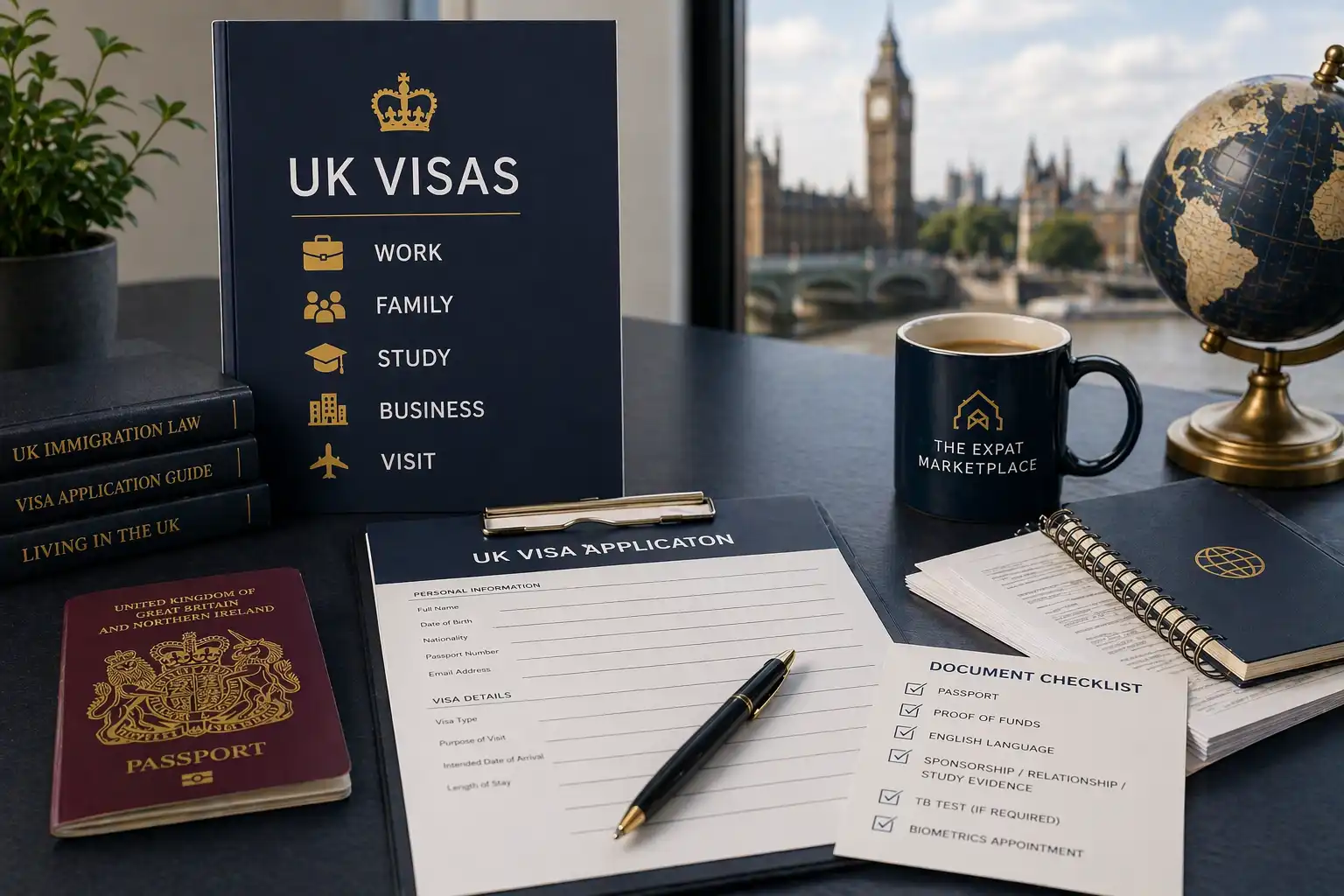
Before looking at specific routes, it helps to be clear on the purpose of your move. In most cases, UK visas fall into one of the following broad categories:
- Work visas for people with a job offer or employer sponsorship
- Family visas for joining a partner or close family member
- Study visas for school, college or university
- Business and talent visas for founders, graduates and specialist applicants
- Temporary visas for short term visits or limited assignments
The correct route depends on your exact circumstances. A visa that looks broadly suitable may still be the wrong option if the eligibility rules do not match your situation.
Innovator Founder Visa
The Innovator Founder visa is designed for people who want to establish and run an innovative business in the UK. The business idea must be endorsed by an approved endorsing body and must be different from anything already available in the market.
- Your business idea must be innovative, viable and scalable
- You must obtain endorsement from an approved body
- You must meet an English language requirement
- You may need to show at least £1,270 in personal savings for 28 consecutive days
This visa is usually granted for 3 years. It can be extended, and settlement may be possible after 3 years if the relevant requirements are met.
Useful official links:
Family Visa for a Partner or Spouse
A family visa allows eligible applicants to join a partner in the UK. This route is commonly used by spouses, civil partners and unmarried partners of British citizens, settled persons or eligible visa holders.
- You must show that the relationship is genuine and ongoing
- You usually need to meet a minimum income requirement
- You must meet an English language requirement in most cases
- You must show that suitable accommodation is available
For many new partner applications, the minimum income requirement is now £29,000 per year. Different transitional rules can apply to people who first applied before 11 April 2024.
This visa is commonly granted for 2 years and 9 months when applying from outside the UK, or 2 years and 6 months when applying inside the UK, with extensions often needed before settlement.
Useful official links:
Skilled Worker Visa
The Skilled Worker visa is one of the main routes for people moving to the UK for employment. You must have a qualifying job offer from an approved UK sponsor before you apply.
- You need a job offer from a licensed sponsor
- Your role must meet the relevant skill and salary rules
- You must meet the English language requirement
- You will need a Certificate of Sponsorship from your employer
This route is often the most relevant option for professionals relocating to the UK for work and can lead to settlement if the requirements continue to be met over time.
Useful official links:
UK Expansion Worker Visa
The UK Expansion Worker visa is part of the Global Business Mobility routes. It is intended for senior managers or specialist employees being sent to the UK to help establish a UK presence for an overseas business.
- You must have a valid Certificate of Sponsorship
- You must usually have worked for the overseas business before applying
- Your job must be eligible under the route
- You must be paid the required salary for the role
This route is temporary rather than permanent and is generally granted for up to 12 months initially, with limited extension potential. It is not usually the main long term settlement route, but it can be useful for business expansion into the UK.
Useful official links:
Student Visa
The Student visa is for people aged 16 or over who want to study an eligible course in the UK with an approved education provider.
- You need an offer from a licensed student sponsor
- You must have a Confirmation of Acceptance for Studies
- You must show you can support yourself financially
- You may need to prove your English language ability
Student visa conditions can affect work rights, dependants and future switching options, so it is important to understand the terms of the route before applying.
Useful official links:
Graduate Visa
The Graduate visa is for international students who have successfully completed an eligible course in the UK and want to stay on afterwards.
- You must already be in the UK when you apply
- You must have successfully completed an eligible course
- Your education provider must have notified the Home Office of completion
This visa allows graduates to remain in the UK for a limited period after study. The current position is that it allows at least 18 months of permission, with applicants who apply on or before 31 December 2026 able to stay for 2 years, or 3 years for doctoral graduates.
Useful official links:
High Potential Individual Visa
The High Potential Individual visa is aimed at graduates of certain eligible overseas universities. It is designed to attract academically strong applicants without requiring a prior UK job offer.
- You must have a qualification from an eligible university
- The qualification must have been awarded within the relevant time period
- You must meet English language and financial requirements
This visa usually allows a stay of 2 years, or 3 years for people with a PhD or other doctoral qualification, although it does not itself lead directly to settlement.
Useful official links:
Documents Commonly Needed for UK Visa Applications
The exact documents depend on the route, but many applications require a similar core set of evidence.
- A valid passport or travel document
- Proof of funds where relevant
- Evidence of English language ability where required
- Supporting documents specific to the route, such as sponsorship, relationship or study evidence
- Tuberculosis test results if required for your country
Some applicants will also need to provide biometrics and attend an appointment as part of the application process.
How to Improve Your Chances of a Successful Visa Application
- Make sure you are applying under the correct route
- Check the current official eligibility criteria before submitting anything
- Prepare your evidence carefully and consistently
- Do not assume older advice or forum posts are still accurate
- Take regulated immigration advice if your case is complex
Many refusals happen because applicants choose the wrong category, overlook a supporting document or rely on outdated information.
Summary
The UK has a wide range of visa routes, but each has its own rules, costs and limitations. The right option depends on why you are moving, how long you plan to stay and whether your application is based on work, study, family or business.
Getting the route right at the start can save significant time, cost and stress later on.
Affiliate Disclaimer
Some links on this page may be affiliate links. We may earn a commission at no additional cost to you if you choose to use certain services.